Filter by Subject
Home / 2020 / May

Indigenous Language & Culture

My first exposure to Indigenous language learning was at the University of Alberta. I was humbled by how descriptive and poetic the language presented. In this session, I learned that in English, one might say, “There is a woman sitting over there.” In an Indigenous language, one would say, “Our grandmother is sitting by the river which is the color of blood running through our veins.” Indigenous languages are holistically connected to family, land, and all species. They are rich in metaphor and imagery. Interactions communicate deep respect, and they invite you to slow down and learn about communication on a deeper level. It is a rarity and privilege to have the opportunity to learn an Indigenous language, particularly in the Indigenous territory which you reside.

There are approximately 2,500 Indigenous students in NLPS. For many Indigenous students, learning the language builds cultural identity, a sense of pride, and a sense of belonging at  school. Access to cultural programming increases attendance. There are post-secondary Indigenous language programs that lead to great careers.

NLPS hul’qumi’num language Team, Elder Many Jones, Elder Jerry Brown, Colleen Manson, Gena Seward-Wilson, Adam Manson, and Cameron Park work with K-12 students to pass down traditional knowledge through hul’qumi’num language instruction. This small team of dedicated teachers are having an extraordinary ripple effect across the district. Non-Indigenous students love the language program. Indigenous and non-Indigenous students have performed traditional stories, songs, and skits in the hul’qumi’num language. One non-Indigenous student had expressed a desire to become an Indigenous language teacher. Do you think her dream can become a reality? NLPS has just hired Mr. Cameron Park, our First non-Indigenous language teacher.

Stay tuned for the hul’qumi’num language team’s Continuity of Learning Session, on May 28, 2020.

Theme for international mother language by Monbeeree CC-BY-SA-4.0

Jacquie Helped me Make it Visual!

A Tale Gathered In the Field

Visuals have amazing powers. They are HANDS DOWN the best scaffold we can give our students to improve their ability to comprehend. In fact, Shelley Moore has been devoting a good portion of her 5 Moore Minutes Special Edition: Home Learning on the topic of visuals and their importance. Adding visuals to online learning is a way to motivate and engage ALL learners. 

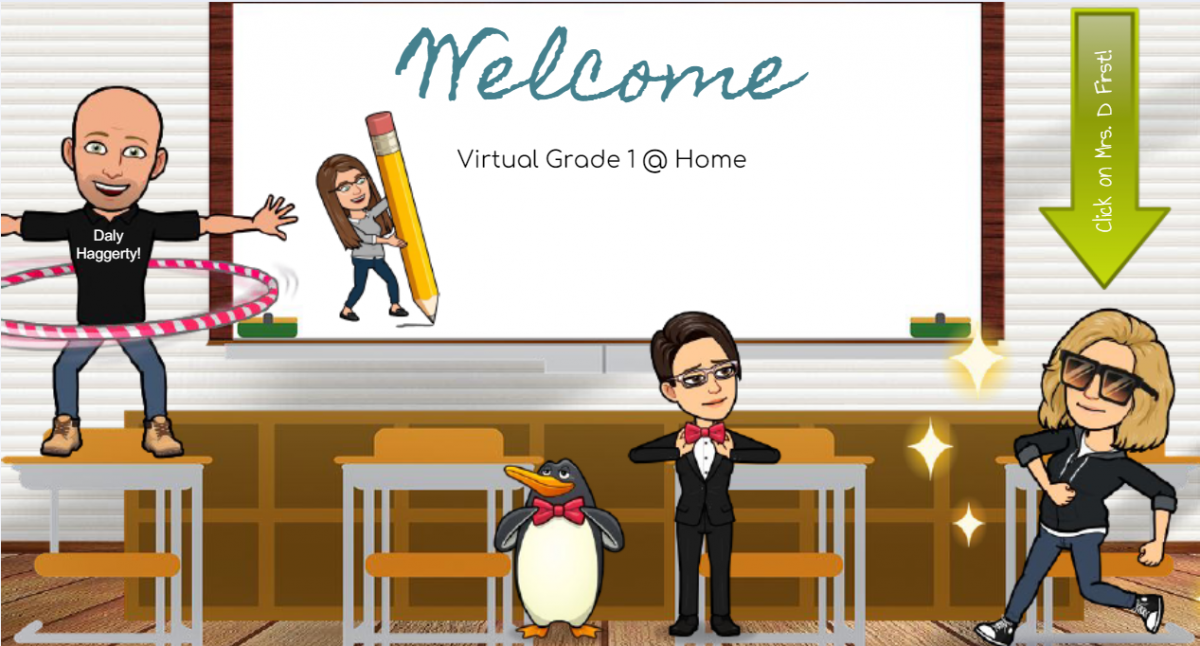
On Twitter I began to see examples of “Virtual Classrooms” pop up everywhere! Twitter friends in my ELL Professional Learning Network were sharing interactive, highly visual virtual classrooms by using Google Slides featuring personalized Bitmojis! 

I am not the most tech savvy individual, but when something looks so cool and inviting, I have to try to figure it out. Thankfully, the amazing Jacquie Davidson presented a session on using Google Slides to build interactive weekly activities! She shared some of the work she and her colleagues at Forest Park have been creating. With a little help from her tutorial and some trial and error, I created my first attempt!

The books on the shelf connect to YouTube read alouds. The coffee cup is the latest podcast I listened to. The fruit bowl connects you to a Google Form for a 3-2-1 Strategy exit slip! If you click on my Bitmoji you will get my latest ELL memo. There are endless possibilities to suit your learner’s needs!  Check out Jacquie’s COL session, and her Google Slides

Thank you for all you are doing to help NLPS Jacquie!!

Strength and Resilience of COVID Graduate

Graduation, commencement, walk-up; it doesn’t matter what you call it, it has special meaning in the lives of teens and their families.  I have been the parent of a grad once already.  It was stressful, exhilarating, emotional and overwhelming.  All of those things were made more special by the celebrations that came one after another: family events, prom, dry grad, convocation.  I have video of the hats being thrown and my oldest son in big groups of people with whom he had spent the last 5 years.  It lasted a few months of his life, and this family will never forget those celebrations. 

This year is a little different.  My youngest son does not have all those events to look forward to.  Day by day, we have been notified of events being cancelled.  Grandparents will not travel to attend his ceremony, and we will not sit in an audience in a theatre.  He will not have Instagram-worthy photos to post of his friends, classmates and teachers as they stand arm in arm, caps and gowns on, celebrating the end of a hard fought journey towards adulthood. 

As a teacher, I ask: What are the lessons in this?  What can be learned?  Will the grads of 2020 be remembered with pity as the poor kids who missed out?  Or is it possible that their loss is gaining them a resiliency and strength that will be their legacy?  Although this is especially difficult for the class of 2020, we have all discovered new strengths, skill sets and problem-solving abilities.  Faced with these overwhelming changes, we have all had to adapt and embrace innumerable challenges that we could never have predicted.  As adults, we are mourning the loss of many things, we are missing our routine and we are exhausted by the challenges of technology.

As I navigate the muddy waters on which COVID has sent us afloat, I consider the resilience of the grads of 2020.  I consider what they have lost that they will not get back, that which they have looked forward to for 13 long years of schooling.  I consider my youngest son with simultaneous sadness for him, but also pride in his ability to accept, to embrace and to adapt.  For that I thank you, teachers of NLPS.  For giving him that skill as you have focused your efforts on the life skills that are really important for each of them uniquely.  The grads of 2020 will persevere, because their teachers have taught them to do that. 

Also, I hope he gets a cool cap and gown to keep. 

Categories
News

Syeyutsus Policy Framework

Syeyutsus is a hul’q’umi’num expression for “walking together,” living and honoring the teachings of the land and First Peoples, while navigating the complexities of today’s changing world. To honor the Truth and Reconciliation Calls to Action, the Board of Education created the Syeyutsus Policy Framework. This policy framework ensures that NLPS work with Indigenous Knowledge Keepers, while moving forward with reconciliation initiatives. The committee refers to themselves as the Syeyutsus Committee. This committee has representation from Mid-Island Metis Nation, Tillicum Lelum Friendship Centre, Snuneymuxw First Nation, Stz’uminus First Nation, Snaw-Naw-As First Nation, NLPS Trustees, Superintendent, Deputy Superintendent, NDTA President & Executives, CUPE Executive, DPAC Executive, Director of Indigenous Education, and Syeyutsus Saays’um (one that does the work to support walking together).

Syeyutsus Policy Framework was regularly introduced and celebrated throughout the district. Staff had the opportunity to learn traditional Indigenous values, as well as teachings that recognize the respectful relationships between the land, species, language, and culture. One of the biggest Syeyutsus events occurred at a Meet & Eat session in January. As per Indigenous protocol, the event began with a greeting and gratitude opening, a drum song, and introduction to the Syeyutsus Committee. The evening included storytelling, a feast, and breakout sessions. All participants were gifted a traditional story to share with their students.

Syeyutsus committee members traveled to various schools to invite students and staff to listen to Elders share stories, learn to drum and sing, and to share a feast. They called these gatherings Singing With Syeyutsus. When social/physical isolation and learning from home occurred, Syeyutsus committee shared their Covid-19 Continuity of Learning resource to support student, staff, and families’ health and wellness. They continued their Singing with Syeyutsus on ZOOM. Despite all changes and challenges, the Syeyutsus Framework Policy continues to support NLPS.

Keeping Pedagogy & Play as Priorities for Learning at Home

A Tale Gathered In the Field

Cedar Elementary

Prior to Spring Break, when you walked into a Kindergarten classroom at Cedar Elementary, you would see natural materials, defined spaces, and provocations. You would also see students using play to learn by spending time outdoors, and exploring areas of personal interest. Kindergarten at Cedar Elementary is play-based, inquiry-based and inspired by the Early Learning Framework. When in-class learning was suspended, the Kindergarten team at Cedar knew they had to think creatively about how they could bridge the pedagogy of the classroom to the students’ home learning experiences.

The Kindergarten teachers wondered:

  • What DOES/CAN play and learning from everyday experiences look like at home?
  • How can we support families when their view of learning may differ from ours?
  • What should we focus on so that learning is accessible for everyone?

After reflecting on their beliefs and values, the Kindergarten team created a document to communicate their priorities for learning. By using a variety of methods of communication, teachers found accessible ways to share play and inquiry-based pedagogy with families.

One of the ways that Ms. Blow & Ms. Allair are supporting playful learning at home is by sharing one play idea a week using the Ministry of Education’s Let’s Play Activities for Families document, which is connected to the revised Early Learning Framework.

Ms. Blow noticed that many of her students started sharing more about the activities they are doing at home. Some common topics were gardening, baking, nature walks, trampoline play, fort building, taking care of animals (farm and pets), and heart art to say thanks to our frontline workers. She is planning to use these commonalities to connect families and keep the learning community together despite being physically distanced from one another. Using what she has heard from families, she has connected learning to the curriculum and made it accessible to the diverse needs of her families.  Ms. Blow intends to capture and tell the memorable and beautiful ways families are spending time together, and tell these stories with pedagogical narration.

Ms. Allair builds on the daily activities families are already doing together while encouraging and sharing ideas connected to literacy, math, play & well-being. Looking for tadpoles in the ponds, baking pretzels together – these are all amazing ways parents are supporting learning AND support the Cedar Kindergarten Priorities (and curricular competencies), even if they aren’t exactly the suggested activities that have been sent home. By staying connected with families through email and FreshGrade, she values and validates the different ways families are supporting both learning and their children’s well-being. She uses her website to post optional learning opportunities for the whole family, arranged according to the priorities they established and the importance of going outside, such as “Backyard Walking Adventure” prompts inspired and adapted from Gillian Judson’s Walking Curriculum.

Thank you to Ms. Blow & Ms. Allair for their dedication to their pedagogy and their families, and  for their flexible approach which has allowed more families to feel successful & connected.
Check out Ms. Blow’s website and Ms. Allair’s website to get inspired!

NLPS Goal #4: Truth and Reconciliation

I recently presented a First Peoples Principles of Learning (FPPL) Professional Development workshop. One educator inquired as to how and why all of this Indigenous conversation started in schools. I shared an overview of the role of the Truth and Reconciliation Commission (TRC) and the 94 Calls to Action. Of course one cannot do justice in presenting a historical overview without digging deeper into the events that led to the social, political, economical, and cultural demises of Indigenous peoples in Canada and the current cultural revitalization.

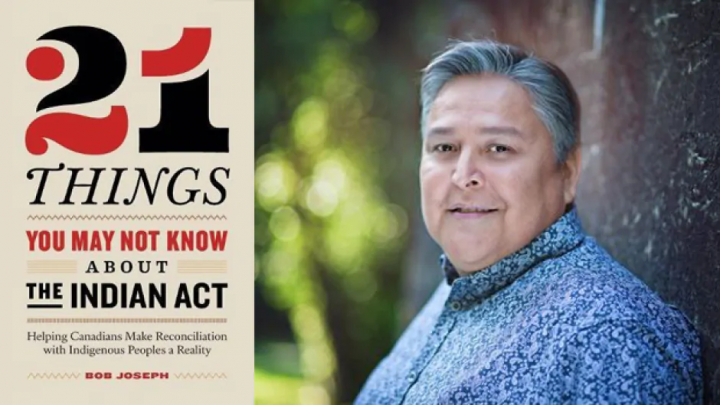
Bob Joseph, in his 21 Things You May Not Know about the Indian Act, communicates, among others, the creation of the reserve system, residential schools, imposition of band councils, demise of women’s roles, and the lasting impacts. In a sensitive and concise style, Mr. Joseph teaches why learning about the Indian Act and its devastating legacy is vital to moving forward with reconciliation. He concisely addressed the above inquiry as to “why” the inclusion of Indigenous content in all curriculum areas. This pocket sized, invaluable resource imparts foundational Indigenous facts and knowledge that all educators need to know to begin to address NLPS’s Goal #4 Truth and Reconciliation.

21 Things You May Not Know about the Indian Act includes terminology, classroom activities, discussion guide, additional reading, residential school chronology, Formal Apology from Prime Minister Stephen Harper transcript, 94 Calls to Action, and 21 things you can do to help change the world.

Play Video

Stay tuned for the upcoming pop-up book club with hosts Stephanie Johnson and Ted Cadwallader, along with special guests.

Caption This! An Engaging Activity for Google Slides

Over the last month and a half, we have been forced to find new strategies to connect with each other and with our students. Adapting new technology is not always the easiest thing to do and it has been amazing to see how our community of teachers, parents and students have been able to work together to create a meaningful experience for our students. Google Classroom has been widely adopted by many teachers in our district and to help you out, there are many different ways that you could use Google Slides and Google Drawing in a meaningful and fun way to make student thinking visible!
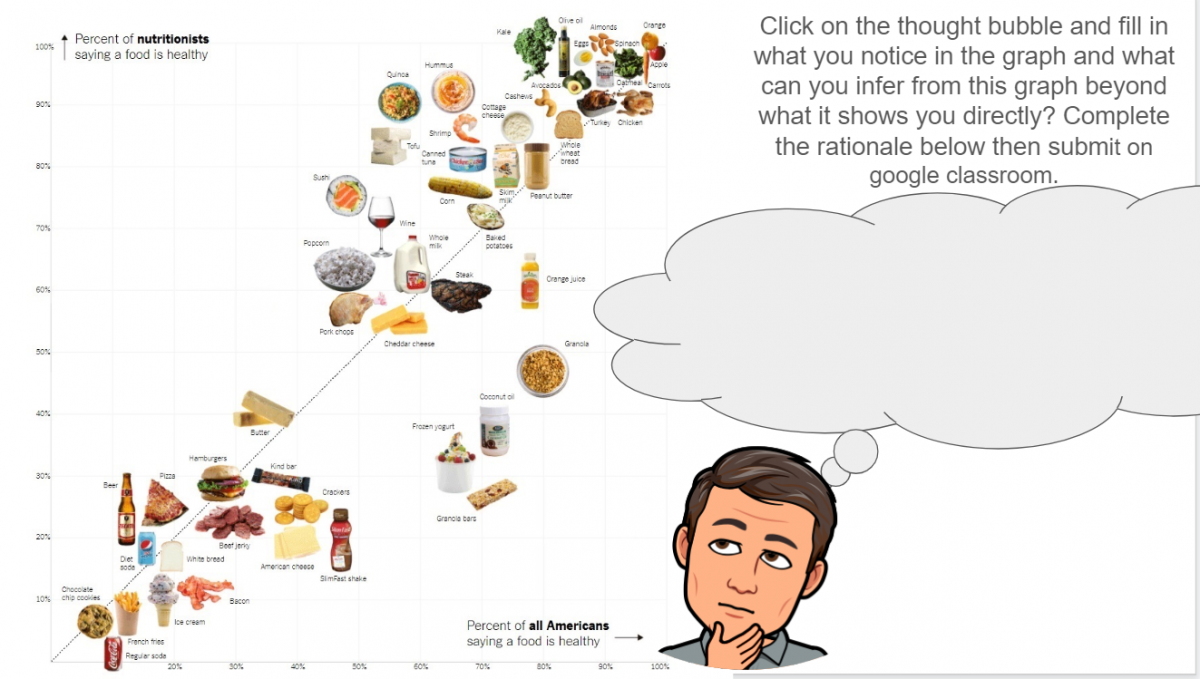
‘Caption This’ is a strategy from the author of ‘Ditch That Textbook’, Matt Miller. This is a great way to get students to share their thinking about what is going on in the image and their understanding of the topic being covered. In this activity students are prompted with an image and are asked to fill in the thought bubble of what the person/object may be thinking.

Here is a link to a template that you could use. Check out Matt’s blog post for more examples of how to use this tool!

Clarity of Assignments in Google Classroom

Who hasn’t finished explaining what we want our students to do and end up with half a dozen hands up?
We wrote our instructions on the board. We provided a detailed handout. We discussed what needs to be done. Still there is confusion.

“What do I have to do?” 

“I don’t get this?”

“Where do I find that?”

“I don’t remember doing that before?”

“I need a new handout.”

We circle around the room and check-in to help clarify our instructions so that students can get on with the task or activity. Sometimes we ask our ELL specialist to work with a few students. If we have an EA, they do the same.

Google Classroom does not have the same supports provided by direct instruction.We can’t physically circulate the room and provide clarification in the same way. If we are lucky, students (or parents) will pop us an email to ask for help. If we are unlucky, we get radio silence.

To avoid lots of clarification emails, or worse, no engagement, we need to think about making lessons, activities and tasks in Google Classroom REALLY easy to follow.

Recommendations:

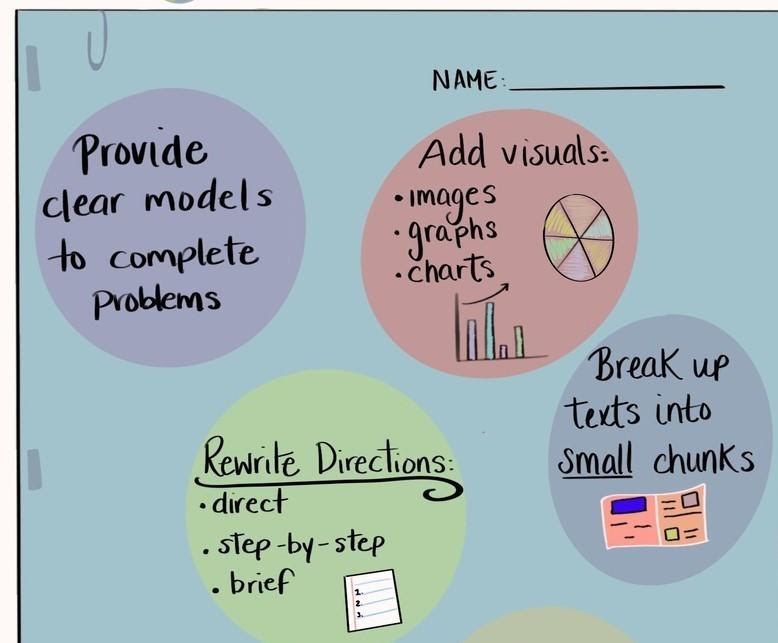
  • Rewrite directions to make them direct, step-by-step, and brief.
  • Provide a clear model of how to complete each activity or problem.
  • Break up text and activities into small, manageable chunks.
  • Add a visual (image, graph, chart).
  • Reword or reduce the amount of text.
  • Keep videos short and add closed captions.
  • Provide graphic organizers, slideshow templates and framed paragraphs.

Continuity of Learning for my Kindergarten Daughter

A Tale Gathered In the Field

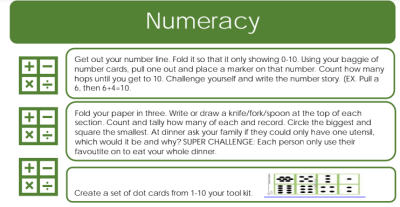
There are many examples of amazing educators showing innovation, compassion, and courage during this time of remote COVID-19 learning. Genny Iaaschsen uses (thematic) learning menus to provide literacy, numeracy, arts and activity opportunities for students with her grade 2 class at Pleasant Valley. Learning menus outline a variety of options that target important learning goals. Students are empowered to participate in some, none, or all of the activities. Most activities have options to promote active exploring outside (with physical distancing of course), engaging with family members, and utilizing supplies found around the house. Genny also provides fun digital resources.

Numeracy picture for blog

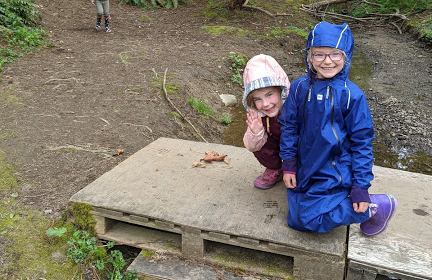
Genny also encourages students to get out in nature and participate in “Wild Wednesdays”. She made videos, scavenger hunts, and even a detailed map of Bowen Park (showing students where the class salmon were released). Most recently, Genny hand painted rocks with the name of each child in her class and hid them in the forest behind the school for students to find. My daughter was so excited to get outside and hunt for her special rock (and those of her classmates). She immediately came home to write about her experience in her class journal. It’s exciting to participate in my daughter’s learning this way.

I’m inspired by Genny’s willingness to try new things and find ways to engage students (and parents).

Thanks for all that you do Genny!

Happy Educator Appreciation Week

Now, more than ever, we can see the impact that educators have on the lives of their students and their families. This week we want to celebrate all of you!

We know that this job is challenging in the best of times, and these are definitely not the best of times. We want you to know we see you and all you are doing. We see you learning new technologies you never thought you would learn. We see you making phone calls, sending text messages, writing long detailed emails, creating websites, and generally responding to family needs at any hour of the day. We see you making school videos, acting silly to make your students smile and stepping outside your comfort zone.  We see you asking for support and connecting more with one another.  We see you worrying about your students that you have not heard from. We see you reaching out, but at the same time trying not to overwhelm your families. We see you checking in on your students’ mental well-being. We see you changing your plans to accommodate the ever-changing context. We see you creating new ways of presenting learning opportunities. We see you re-thinking “the way we have always done things”. For all this, and so much more, a big thank you to all NLPS Educators from the Learning Coordinators.

Playful, Meaningful and No-Tech Reading Activities for K-2

On March, Friday 13th, we all left our schools anticipating a two-week spring break of rest and rejuvenation with the understanding we would return to the same school on March 30th.

Within a matter of days, all our spring breaks turned dramatically into a long game of hide with no seek.  This new way of life has made me ask questions of myself.

Like…what do I really know?  Well, I know that our students, families, and especially teachers are resilient. 

What do I not know… yet?  What this new version of school will actually look like, sound and feel like. 

What I do know for sure, is that we cannot do it alone.  If there was ever a time to embrace collaboration, it is now. You know what I am talking about:  when you see someone doing something great, and you wish you thought of it, but instead you compliment them and plead for permission to use it yourself.

These ideas, previously shared by other educators, are playful, meaningful and no-tech ways to encourage reading skills at home. If you are interested in sharing your own ideas, please email me!

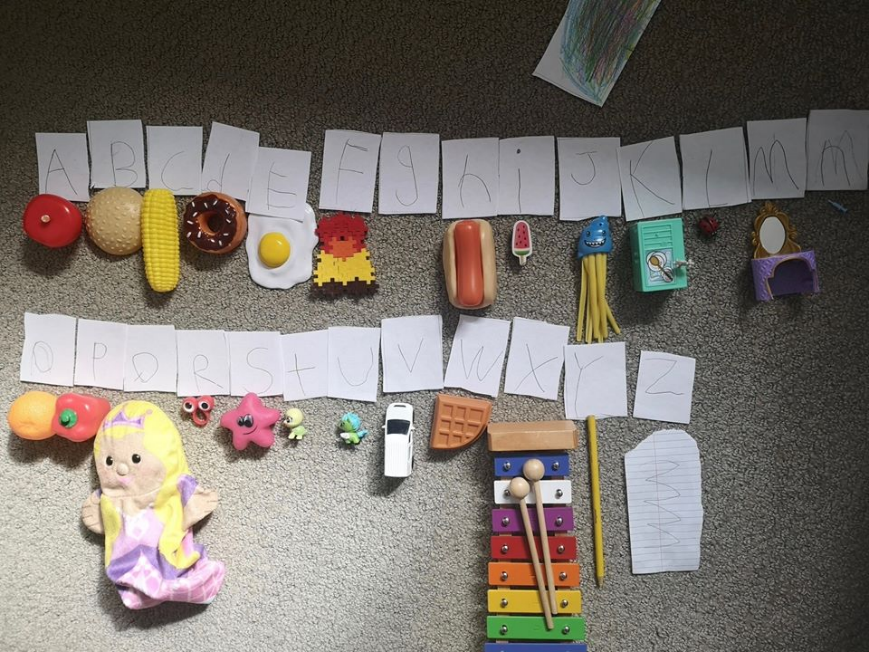
# 1 Inside - Letter Sound Recognition

  1. Student creates individual letter cards or used letter tiles/magnets
  2. Organizes letters in alphabetic order
  3. Then finds an object for each initial letter sound and says it aloud
  4. Could change the task and focus on final sound of each letter.

#2 Outside - Letter/Sight Word Recognition

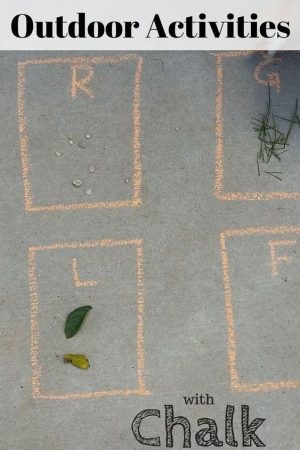
  1. Student creates letters with chalk or outside objects such as sticks and rocks
  2. Organizes letters in alphabetic order, or make sight words with an object for each initial letter sound
Playful Reading 2
Playful Reading 3

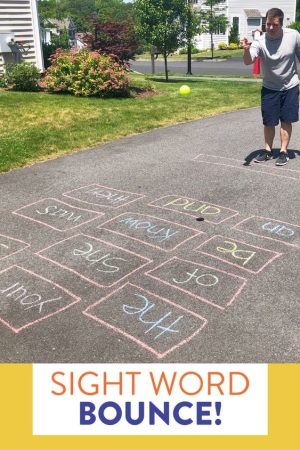
#3 Reading & Moving

  1. Student writes out sight words of the week (inside on stairs, outside with chalk)
  2. Then put them places that encourage movement to read and or spell aloud