Exemplar unit plans created by NLPS teachers – digital versions

Having clear indicators of proficiency for each curricular content area is very valuable. We have built on the rich work of Janice Novakowski from the Richmond School District by adding examples of learning activities and resources, both online and from books available in your school so you can see it in action.
Our goal was to highlight practices focusing on collaborative exploration and flexible thinking. The documents available are in draft form and will continue to be revised and enriched in 2023-2024.
If you have some suggestions, comments or questions, please contact thelearningline@sd68.bc.ca.
What could your lesson look like? Are you looking for a structure that allows you to integrate rich instructional routines that naturally differentiate and help students develop their core and curricular competencies? The following lesson structure is just one example of how this can be done.

Instructional Routines:
We know that humans love mysteries because our brains crave the joy that comes with discovery. So, let’s pose a challenge so compelling that students are begging you to help them figure it out.
~Gerald Aungst Tweet

Slowly reveals a graph one piece at a time so students slowly use the different parts of the graph to draw understanding of what is going on in the graph.

Visual prompts to help students develop estimation skills.

Sets of objects that are all similar but and have a reason why each one does not belong.

Website that supports multiple teaching routines. Elementary

Provides weekly graphs that revolve around current issues

Groups of images that insight mathematical reasoning and discourse.

A site that provides estimation challenges from a different perspective.

Exemplar unit plans created by NLPS teachers – digital versions
Students will develop mental math strategies to make sense of quantities through problem-solving.
3 Act Task
Students will develop mental math strategies to make sense of quantities through problem-solving.
3 Act Task
Students will develop mental math strategies and multiple approaches to solving problems through problem-solving. They will also explain, justify and represent mathematical ideas.
3 Act Task
Students will work to connect and visualize mathematical concepts and then explain and justify mathematical decisions and ideas.
3 Act Task
How can we connect, visualize, and justify mathematically concepts?
3 Act Task
Learning Intention: I can show my mathematical thinking in pictures, numbers, and words.
Students will use flexible computation strategies, while problem-solving.
3 Act Task
Students will develop mental math strategies and abilities to make sense of quantities while problem-solving.Â
3 Act Task
Students will develop mental math strategies and abilities to make sense of quantities while problem-solving.
3 Act Task
Learning Intention: I can engage with others and represent numbers visually in a variety of ways.
In this lesson, students will explore how to build flexible number sense and mental math strategies that work for all numbers.
Exploring ways that we can visualize and explore mathematical concepts while engaged in the problem solving process.
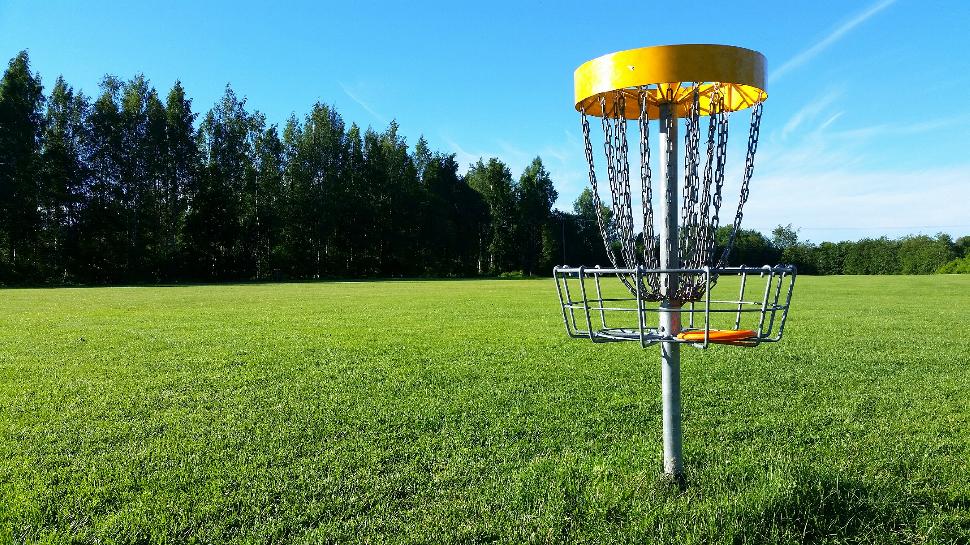
Inquiry Question: How far did the disc fly?
3 Act Task
How can we use flexible computation strategies and develop a relationship between addition and multiplication?
Inquiry Question: How many graham crackers are inside a full box of Graham Crackers?
How do numbers helps us communicate and think
about ourselves?
INQUIRY Question: How can we decompose and
compose numbers to help us add, subtract,
multiply and divide?
Grade 3/4
Number talks equations or strings are used to provide students with regular computation practice while developing mental math strategies. A problem or a string of connected problems are presented to the students on the board and the students are asked to find an answer and be be prepared to share their strategy.
Why use Number Talks?

Possible strategies when students are prompted with 5 x 18.

Number talk images are similar to a number talk where you use an image to drive conversation around finding a quantity.
Why use Number Talk Images?


A fraction talk is a number talk that only focuses on fractions and fractional thinking. An image is displayed that shows fractional relationships. Students then need to justify and which fraction that they see.
Why?


In this routine, students will will be presented with 4 images and the will have to determine how they are all unique and how they are all the same. Allow the students to interact with the images how they choose there is not one right answer and their answers may not be very ‘mathy’ but you will start to hear all of your students voices!
Why?


Begin by showing students an image of a quantity. Then, together as a class determine an estimate that is reasonably too high and reasonably to low. Have the students think about their best estimates and how they could represent their reasoning.
Why Use Estimation Routines?


The following sites have great visual estimations for use in you classroom.