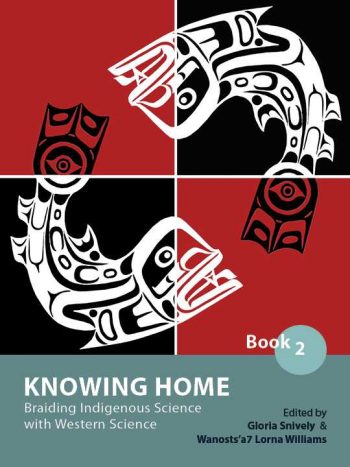
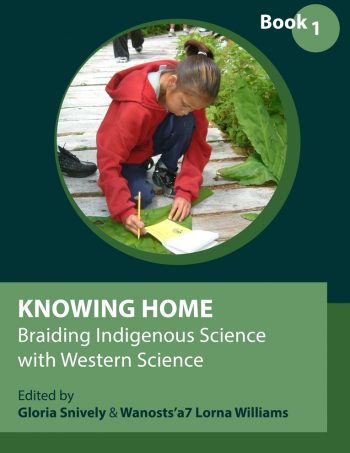
Braiding Indigenous Science and Western Science is a metaphor used to establish a particular relationship. Linked by braiding, there is a certain reciprocity. Each strand remains a separate entity, but all strands come together to form the whole. When we braid Indigenous Science with Western Science we acknowledge that both ways of knowing are legitimate forms of knowledge.
The book provides a window into the vast storehouse of innovations and technologies of the Indigenous peoples who live in Northwestern North America. It is our hope that the Indigenous Science examples, research and curriculum models will inspire deep reflection regarding the under-representation of Aboriginal students in the sciences. It is intended that the rich examples and cases, combined with the resources listed in the appendices, will enable teachers and students to explore Indigenous Science examples in the classroom, and in addition, support the development of curriculum projects in home places.
Culturally Appropriate Curriculum Projects Included:
Chapter 7 – Cross-Cultural Marine Science: Culturally Inclusive Curriculum for All Learners
DAVID ASHURST, RICHARD KOOL, AND GLORIA SNIVELY
Chapter 8 – Secondary School Student Researchers Use Digital Video as a Learning Tool for Retaining and Transferring Indigenous Knowledge
MUPENKIN JOHN LYALL AND TED RIECKEN
Chapter 9 – Learning from the Homeland: An Emerging Process for Indigenizing Education
WSÁNEC SCHOOL BOARD AND TYE SWALLOW