






This newly updated document is designed for teachers of Mathematics in British Columbia . It has been developed by the First Nations Education Steering Committee (FNESC), supported by the BC Ministry of Education and it is grounded in the view that increased student success can be achieved through adjustments in pedagogy and approach that make mathematics feel more inclusive and engaging. Development of this resource has been guided by the recognition that
- teaching and learning with respect to First Peoples in British Columbia’s school systems should be based on authentic knowledge and understanding, as articulated by Elders, educators, and other content experts from within British Columbia’s First Nations and Métis communities
- decisions affecting teaching and learning with respect to First Peoples in British Columbia’s school systems should take appropriate account of the advice of community leaders from within the province’s First Nations and Métis communities
- while commonalities exist, First Peoples’ cultures within BC are extraordinarily diverse.
The 2020 revision of this document also supports implementation of the Calls to Action of the Truth and Reconciliation Commission, specifically the call to “integrate Indigenous knowledge and teaching methods into classrooms” (clause 62) and “build student capacity for intercultural understanding, empathy, and mutual respect” (clause 63).
Accordingly, the goals of this guide are:
- to contribute to reconciliation for all by building greater understanding of the skills, knowledge, and perspectives of First Peoples for all students
- to ensure the inclusion of First Peoples knowledge and perspectives is done respectfully and without appropriating First Peoples knowledge
- to encourage and support the respectful development of local teaching and learning resources
- to provide support for the implementation of the BC mathematics provincially prescribed curriculum
- Grade(s): Intermediate, Secondary
- Patterning & Linear Relations, Numeracy, Fractions & Proportional Reasoning, BC First People, Financial Literacy, Geometry & Measurement, Data & Probability, Computational Fluency & Algebra, Indigenous Understandings, Number Sense
- External Website Link, Indigenous Contributors, Lessons, Units & Resources for Instruction
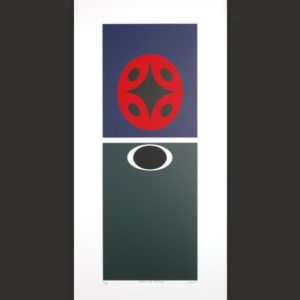
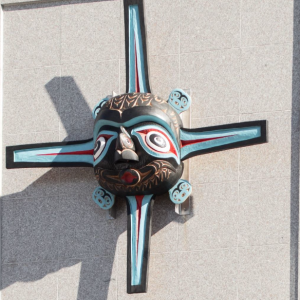
 This cross-grade numeracy resource provides multiple lessons with hands-on engaging activities to teach mathematics with Indigenous perspective, through oral histories, contemporary art and highlighting Indigenous role models. Developing the resource involved consultation with local Ts’msyen educators and advisors, the development of new literature in coordination with the Ts’msyen Sm’algyax Language Authority, consultation with outside numeracy experts, and piloting lessons in classrooms.

 In this lab, students will be given an unknown (to them) “Simulated Bodily Fluid”. This fluid is clear and represents the droplets from a cough or sneeze, blood, saliva or the fluids exchanged during intercourse. Students will simulate the exchange of bodily fluid with three other students. After three exchanges have taken place, students will then test their own sample for the disease. Once the testing is complete, the students will find out which student samples in the entire class turn out to be positive. Using this information, students will then trace the route of transmission by using a flow chart to find the original carrier.